Dispatches from Baltimore
An Anglo-Catholic walks into a revival… and grace abounds.

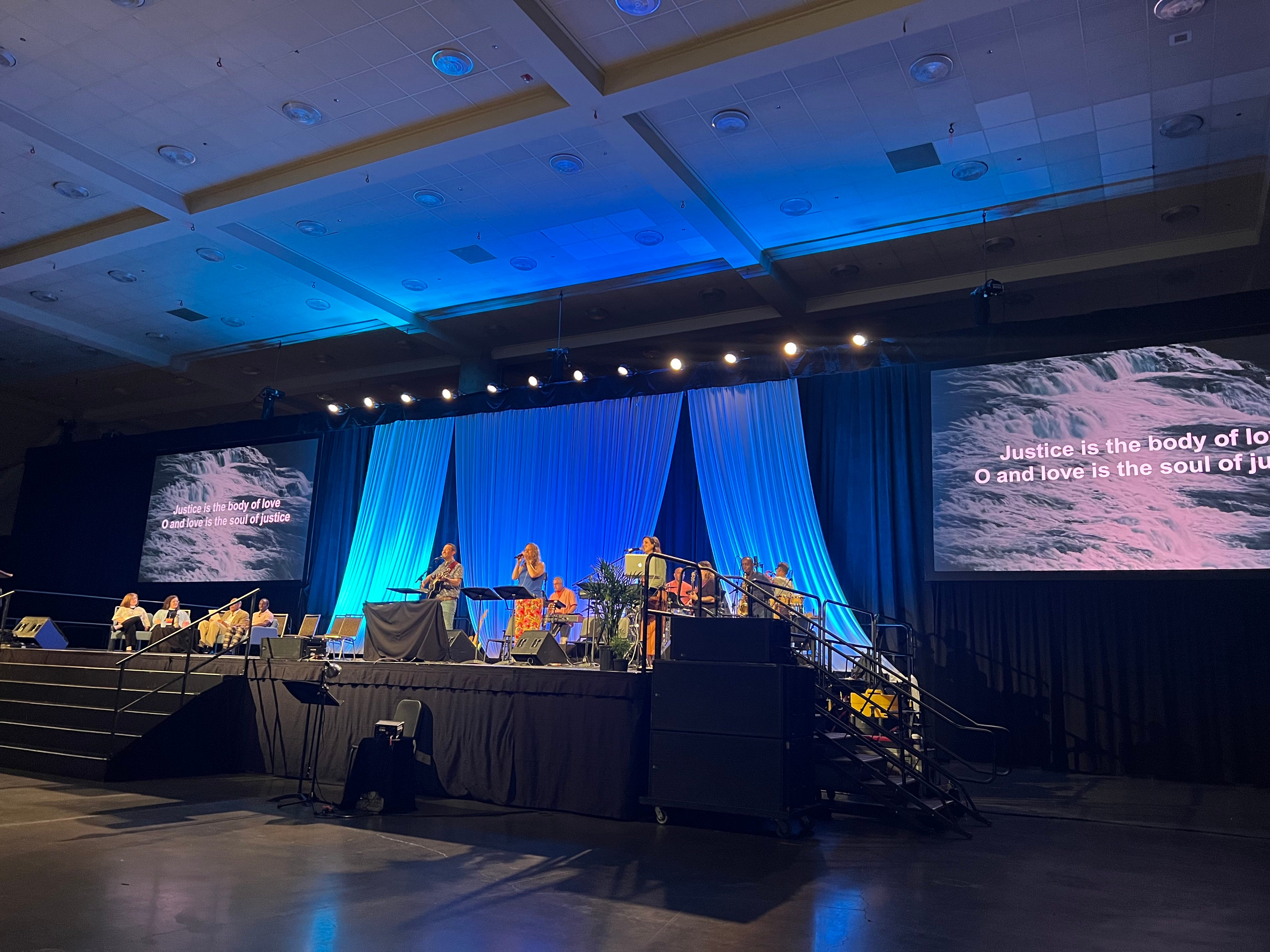
If you know me personally, then the news that I decided to attend a revival event entitled “It’s All About Love: A Festival for the Jesus Movement” might come as a bit of a shock. (But, if you know me well, you know that I sometimes enjoy being unpredictable.) Nonetheless, a year, nearly to the day, after my last visit to Baltimore, I once again found myself in the midst of a swathe of Episcopalians, both clergy and laity alike, scattered in and around the Baltimore Convention Center, a building evidently constructed to take advantage of tax breaks around structural steel triangles. (I suspect that holding this second gathering a year after General Convention provided a convenient way to fulfill those portions of the contracts broken when General Convention was truncated at the eleventh hour.) Not being an alternate deputy, but a full-fledged attendee, I decided that it would be best to make the most of my time at the gathering. The festival was intended to focus on Evangelism, Racial Reconciliation, and Creation Care, in a gathering centered in worship, learning, action, and fellowship.
The “Episcopal Revival” phenomenon is one which I find rather fascinating. It seems to have been initiated by our current Presiding Bishop - whose homiletical style, while not my personal favorite (I like brief and succinct homilies, because I learn better from reading than hearing), is infinitely more compelling when encountered in person. Like the Eucharist, it requires presence and proximity; it loses some of the je ne sais quoi in telecasting. As for revivals in general, I’m somewhat wary of ones that come from the top down; contrast these with, say, the Asbury Revival this past February - whose full fruits have not yet ripened, I think. But, today’s Gospel was the Parable of the Sower; the seed has been scattered, and now we await its germination.
I. Worship
To be frank, as an ardent Anglo-Catholic, and a clergy family survivor, the worship services were… not my cup of tea. They were interesting, and seem to have been well-executed, but having never really dwelt in the praise and worship milieu, they were, overall, an extracultural experience. One beheld the mise en scene after, perhaps the bemused and detached manner of a Bedouin tribesman at a convention of vacuum-cleaner sellers. That being said, credit where credit is due; I was impressed with the band, “Live Hymnal,” out of Florida; their saxophonist in particular was really top-notch. In like manner, the combined gospel choir which sang prior to the Tuesday evening liturgy was rather good. The liturgies appeared to follow the general pattern of the Liturgy of the Word (save for the Eucharist, which was held at the conclusion of the festival) although the familiar texts were generally supplanted in a stylistic manner - all, perhaps, what might qualify as Rite 3 liturgy. This, however, is largely a matter of style - and style, per Henry Petroski, exists downstream of failure, function, and form.
II. Learning and Action
The panels, workshops, labs, and huddles presented in Baltimore covered a broad spectrum of issues, all focused around the three core themes - Evangelism, Racial Reconciliation, and Creation Care. I found each one that I attended informative, and, while no one parish would ever be able to fully implement every suggestion, many items will be useful at Valley Forge, Cape May Point, and throughout the Valley Forge Deanery and the Diocese of Pennsylvania.
I was particularly intrigued by the Tuesday afternoon lab on Digital Storytelling and the Episcopal Asset Map, an unfortunately-named project which has the laudable goal of putting every parish, school, and ministry of the Church on the Web. My partner for that was the rector of the former summer chapel in Bay Head NJ, which became a full parish about thirty years ago. While we shared stories from our own ministries, as almost an “elevator pitch” exercise, we also bonded over the mutual experiences of worship by the sea. (And, as a friend of one of the eight seasonal chapels in the Diocese of New Jersey, I also mentioned the desirability of having seasonal houses of worship be featured as their own category within the Asset Map. There are apparently “around 85” seasonal chapels in the Episcopal Church, as of 2015, but nobody really knows for certain).
I also enjoyed President Ayala Harris’s panel on “The Future Church,” with members of the House of Deputies including “Jeopardy priest” Fr. David Sibley of Walla Walla, WA, and my dear friend Nathan Brown, of St. Paul’s K Street. One of the things which arose from that panel is a need for us to focus on the ability for people to safely access our houses of worship to the fullest extent practicable, and the need for deanery, diocesan, and national assistance, particularly for smaller parishes which may not be able to undertake a large-scale facilities campaign. The President and the panel both understand that, being a church whose heritage dates back to the earliest arrival of the English colonists, a sensitive hand will be needed in preparing four centuries’ worth of built environment to meet the challenges of tomorrow.
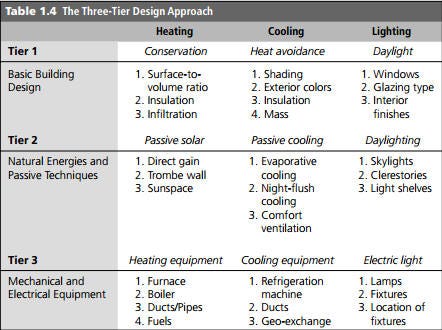
The panel on Renewable Energy and the Church was also quite good; working in architecture, of course, solar panels on the Nave roof may not always be a necessary or practical retrofit. (The parish I attended in college, for example, would not have been able to manage the additional roof load - though its giant south-facing roof would have provided an excellent site for it.) Lechner’s three tiers of environmental design are worthy of keeping in mind here; most of what we will be able to do with our sanctuaries is changes to the mechanical equipment, and maybe a few passive systems improvements, but in renovating education wings and constructing new buildings, we may be able to implement primary building design strategies.
There were many other panels, covering a variety of topics; a full listing of those would require a rather lengthy treatise.
III. Fellowship
Strip away from the conversation all discussion of style, for style-as we have noted-exists downstream of failure, function, and form. The most important thing that remains is the act of gathering itself, and the “aleatory space” which the gathering permits. Just as I noted last summer, in my reports from the General Convention, events like this provide an opportunity to connect beyond our regional, ecclesiological, or political siloes. And, just as at Convention, it has been a blessing to get to sit and talk with people from (mainly) up and down the East Coast - to share what we’re doing in the Diocese of Pennsylvania and in the Deanery and Parish of Valley Forge, and to learn what people are doing elsewhere. It reminds me of the pin-up reviews we used to do in architecture school; these would rarely ever be graded, but they provided us an opportunity to look at one another’s work - and one another’s responses to a specific problem.
To some extent, these sorts of conversations have formed the core of every ecclesiastical gathering, from the Anglo-Catholic Congresses of yore to the grand and glorious General Conventions of the postwar era. They also allow for informal conversation, far from the agenda-stoking organs of the ecclesiastical press. It is unfortunate that more are unable to participate in them, but the Episcopal Church, being an institution built by the upper and upper-middle classes, tends to structure itself around the convenience of academics, retirees, and people who can afford to take a week or two of vacation per year. This is a significant trade-off, and one which a casual report alone will never resolve.
Conclusions
I remain a bit uncertain about revivals initiated at the upper echelon of the Church. That being said, quite apart from the stylistic quibbles surrounding the worship opportunities, the opportunity for gathering, connection, and the exchange of ideas cannot be discounted. I would have liked to have heard more from people within the mainstream, and to have seen more opportunities for younger people in leadership to attend, but I was heartened by the diversity of ideas and parishes I did encounter.
While I would love to see more Diocesan and National church events extol the glories which have been nurtured within our own tradition, I suppose that could lead to pointless internecine squabbles over which Mass setting to use. (It’s the Willan, by the way.) And, while we in the Church love to debate the fine points of style, that does very little good if there are major shortfalls in our existing form and function. Perhaps, by zooming out a bit, putting up with some silly liturgies, and engaging with people in other corners of the Church than our own, we might be able to begin to think more critically about the finer points of the demographic crisis now closing in upon us all. If we don’t hang together, as Ben Franklin once said, we may as well hang separately.