Intimate Conversations
Considering the ways in which we talk to God and to our neighbor.

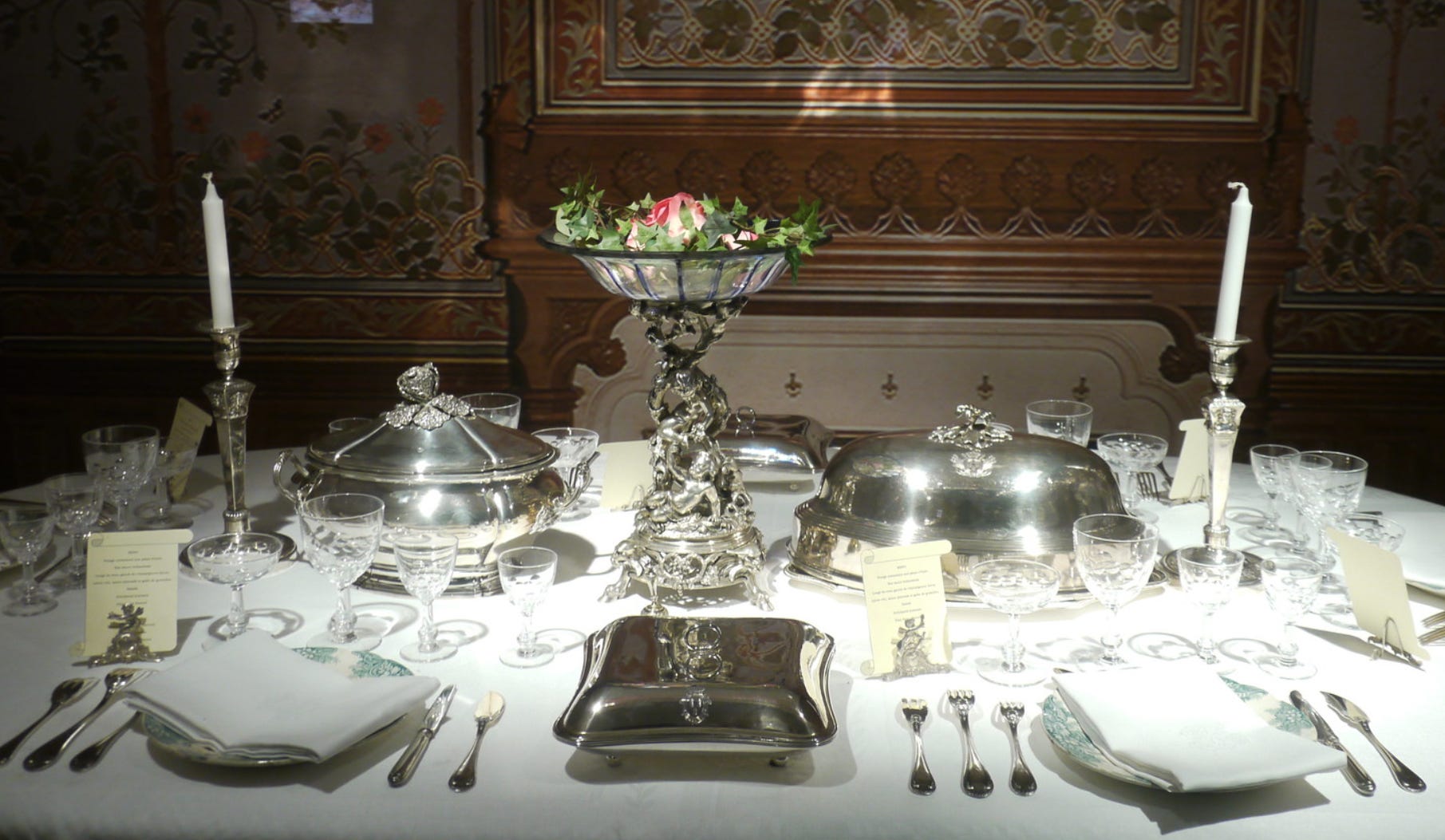
Ever since the promulgation of Rite 1 (“traditional”) and Rite 2 (“contemporary”) language in the 1979 Book of Common Prayer, there has been far more heat than light generated over which is the “rite” one to use in a given circumstance. Lovers of the latter may call the former “hidebound elitists;” the former might just as easily sneer at “that happy-clappy stuff.” See these Christians, what love they have for one another! And yet, most of the blame for this falls upon the heads of the framers of the ‘79 themselves, and their explanations (or lack thereof) for what they’d done.
To that end, I’d like to float a proposal on more clearly understanding how we speak with God.
Rite One is English, but English in a hieratic register. It is written to be heard - echoing through the length of a cathedral nave: But thou art the same Lord whose property is always to have mercy! or cutting like a bell through the fog of a troubled mind: O Lord, in thee have I trusted; let me never be confounded! Certainly archaic by modern standards; it was, in fact, somewhat archaic when Cranmer first cleft ink with quill over four centuries ago. Think of it as a family heirloom - your grandmother’s silver, that Austro-Hungarian dinner service for twelve, a fine damask tablecloth. Of course, it’s vanishingly rare to encounter a bouillon spoon or a fingerbowl in the wild, much less attend an eight-course meal with full service a la Russe. The interested guest will soon internalize a few basic rules of thumb, and these will eliminate any questions about “what fork to use” (use the outermost utensils for each consecutive course, by the way).
Rite Two is English, but English in a demotic register. This is the language of every day in the modern day: For our families, friends, and neighbors; and for those who are alone, the language we’re besieged with from morning to night: My soul proclaims the greatness of the Lord. These are prayers that are written to be read with the eyes and - as oratory was on the way out by the 1970s - spoken into a microphone. These are the glass tumblers and porcelain plates of everyday life. We’ve all got them; some sets are quite lovely indeed, but their significance is mainly understood to us alone. Perhaps, with time, some of this will become a heirloom, even if it is still hallowed more by association than by artistic labor, but it’s just as likely that it will be regarded as kitsch, just like the transferware plates with green-and-orange daisies of fifty years ago. (Some of this will also be found to have lead in the glaze!)
Rite Three is not formally quantified and rarely discussed, but it certainly exists. This is English in an intimate register. These are the things we say when we are alone, with loved ones, or in groups of like-minded people. They can be startling: Eternal Spirit: Life-Giver, Pain-Bearer, Love-Maker;1 they can be both frank and vague, depending on your degree of intimacy: Wondrous are you, Holy One of Blessing. It is this language - the “expansive language for God” spoken of by the loudest noises on the Standing Committee for Liturgy and Music - language of which John Henry Newman wrote, in his Letters to Keble, Burning thoughts and words are as open to criticism as they are beyond it. What is abstractedly extravagant, may in particular persons be becoming and beautiful, and only fall under blame when it is found in others who imitate them. When it is formalized into meditations or exercises, it is as repulsive as love-letters in a police report.2 How does one extend this metaphor into the kitchen? Perhaps it’s the couple eating cold pizza in their pajamas. Perhaps whipped cream, chocolate-enrobed fruit, and other such viands are involved, and - Perhaps some hapless Title IV intake officer will have a coronary if I continue the conceit in this line!
The problem is that, at this point, the conceit also falls apart under its own weight. As anyone who has ever been young and in love knows, sometimes a highly intimate occasion is when one might go for maximal formality! Who among us hasn’t seen, in some quiet corner of an upscale restaurant, a gorgeous young couple, him in a dinner jacket straight from Leyendecker’s brush, her a dream in a shimmering black dress, lost in each other’s eyes over their osso buco? Those people, I assure you, are already having a wonderful evening, and they’re both enjoying one another very, very much.
Now, how does this all tie back to the Prayer Book?
We begin with the Eucharist. This is the Wedding Supper of the Lamb, after all, or at least a foretaste thereof. It may be simple, it may be complex, but it should always be an occasion for an outpouring of elegance and grace - from the sunlight making radiant the billowing surplice of a priest in her clear-windowed country parish, to the haze of incense smoke through which candles glister the embroidery on the ancient vestments of the Anglo-Catholic shrine. What it should not evoke is the cafeteria of our childhood school, with unsmiling persons in hairnets wetly splatting ladles of “casserole” onto plastic trays. This cornerstone of the practice of our faith is flanked by the two great lights of the Daily Office, Morning and Evening Prayer. These, unlike the Eucharist, may be prayed individually; they are not contingent upon a gathering, and so there is more latitude there. And, of course, the life of a Christian is a life of prayer. There are innumerable opportunities through the day to respond to a situation with prayer - sometimes, even a prayer prayed in the silence of the heart.
Our concern here, however, is with gathered assemblies. Rite Three is best used in cases where one can be sure of not accidentally baffling a guest - at simple suppers, or Bible studies, or closed meetings, where you can be sure that everyone is on an even footing. “The Grand Architect of the Universe” is a perfectly admissible expansive-language term for God the Father, and is regularly used in gatherings of likeminded persons - but if you use it in mixed company, you’re liable to receive some funny handshakes from certain men during the Passing of the Peace.3 I would argue that, since Rite Two is the language of daily life, it is better used at the less formal public liturgies. Many of the Rite Two resources, particularly the preface to Eucharistic Prayer C (which, speaking of things overly redolent of their own era…), the dialogue forms (III and VI) of the Prayers of the People, and the presentation at the Sacrament of Holy Baptism, really require the worshiper to read the text off the page, which suggests a limitation on the size of the space, as well as familiarity on the assembly’s part with the available resources and the general locations of specific texts, anthems, and prayers. Rite One, redolent of Cranmer and King James, is thick with allusions, references, and potent memories, and it is thus used ideally at the high holy days, special occasions such as episcopal visitations, and - depending on your parish - it may be more appropriate to use at the principal Sunday liturgy. Who, around Christmastime, does not find themselves humming “For unto us a child is born,” only to feel a pang of disappointment when confronted with the NRSV’s gormless “For a child has been born to us,” a rendering which would have driven Händel himself to tears?
A very interesting effect could be achieved by simply reversing the Rites for a season - use Rite Two at the 8 AM service, and Rite One (Merbecke in a green or purple season, Willan in a white season) at the later service. You might be surprised at who comes to enjoy the change! After all, it’s never too late to try new things - and, at that great eternal banquet of which the Eucharist is but a foretaste, there will be delicacies aplenty of which we of the Church Militant cannot even begin to dream. Best of all, even at this foretaste of the Wedding Supper of the Lamb, we don’t need to worry about accidentally crushing an antique teacup, drinking the contents of the finger bowl, or putting the silver through the dishwasher.4 So why shouldn’t we make use of our inheritance? Certainly, attempts to be too up-to-date have given us harvest-gold prayers with avocado-green shag carpet accoutrements, but there are treasures hiding just beneath. So let’s go into our churches’ basements and closets and attics, and blow the dust off these things, and bring them out from obscurity to let them be enjoyed anew.
They’re yours.
They’re mine.
They’re ours.
This was the original beginning of what is now popularly called the “New Zealand Lord’s Prayer.” It was not written for ANZPB; it is an expansion of the Lord’s Prayer after the ideas of Louis Evely, as written by the late Jim Cotter. It was also sanitized for the Kiwis’ consumption.
https://www.ecatholic2000.com/newman/pusey-08.shtml
Freemasons, obviously. What did you THINK?!
The risk of slopping red wine onto the linen, of course, abides - although it becomes the Blood of Christ, the stains are just as prone to setting.
Beautifully written, as always. But we don't dumb down Shakespeare, and play it as it was written. Rite 2 is the first dumbing down, and Rite 3 is unequivocally New Age: Creator, Redeemer, Sustainer, etc.