TREC-ing Into the Future
Revisiting a decade-old initiative, and contemplating how it might reshape The Episcopal Church under the tenure of the new Presiding Bishop.

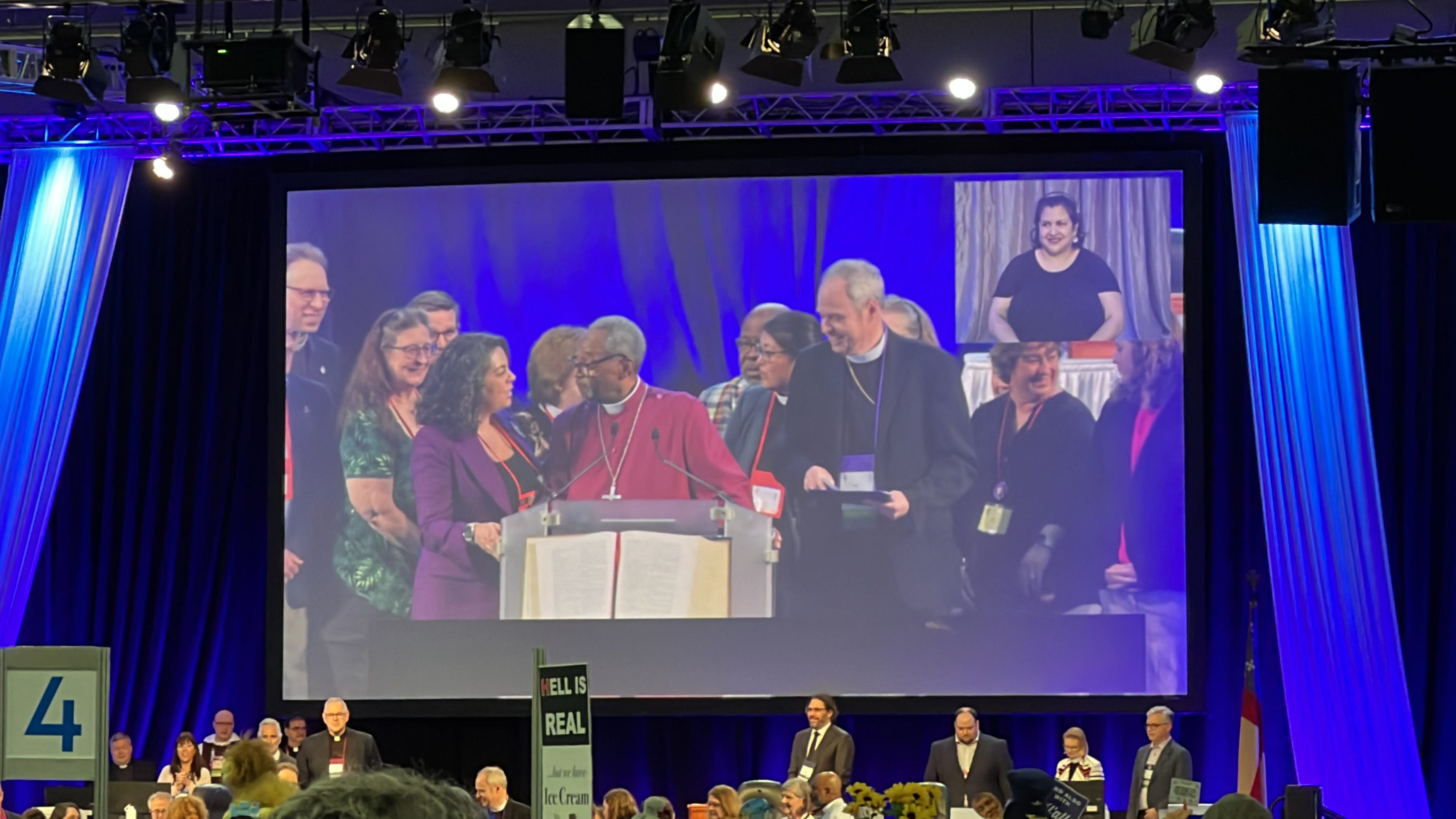
This weekend, the Episcopal Church will celebrate the investiture of its 28th Presiding Bishop, the Right Reverend Sean Rowe. At age 49, he is the youngest person to have ever been elected Presiding Bishop, and - having been consecrated at age 32 - he is one of the longest-serving members of the House of Bishops, having been elected in the Diocese of Northwest Pennsylvania [see city: Erie] in 2007, served as provisional bishop in the Diocese of Bethlehem [northeast Pennsylvania] from 2014 to 2018, and, since 2017, having served as the joint Bishop of Northwest Pennsylvania and Western New York [see city: Buffalo].
With his investiture, the three chief administrative officers of the Episcopal Church - the Presiding Bishop, Julia Ayala Harris, the President of the House of Deputies, and Rev. Steve Pankey, vice president thereof - will all be members of Generation X, and all under the age of fifty. In a church defined as much by its past glories as its aging demographics - we may safely expect that the next nine years will be a time of significant transformation and change. While Bishop Rowe has not elaborated too much on his plans for the Church which is to be placed in his charge, by looking at the past, we might gain one vision for the future.
The Story of TREC
Both the Presiding Bishop and the President of the House of Deputies were members of TREC, the Task Force for Reimagining the Episcopal Church, which was chartered by Resolution 2012-C095 at the 77th General Convention. C095 was one of 45(!) resolutions on “Structural Reform” to have emerged from various diocesan or provincial conventions, in this case that of the Diocese of [Northern] Florida [see city: Jacksonville]. By the time C095 came to the floor of the House of Deputies, what had started life as a schematic “Special Commission on Missional Structure and Strategy” had received a proposed composition, a fast pace for establishment, and a mandate to seek and exchange information with the wider Church - including people under the age of 35. Its budget request was increased fourfold, to $400,000 (although it only received $200,000 in the final budget, a grant of $150,000 was furnished by Trinity, Wall Street). The resolution, with some light floor amending, passed in the House of Deputies - and was concurred unanimously in the House of Bishops.
And so, TREC was born. Over the next three years, it authored papers, held a then-innovative hybrid “Churchwide Meeting” (featuring then-Bishop Michael Curry, three years before his election as Presiding Bishop) and inspired torrents of Tweets and bushels of blog posts. The “Churchwide Meeting” video, and some of the reports, are still readily accessible online here, and here. When the Blue Book reports were compiled for the 2015 General Convention, TREC had, essentially, come to the conclusion that the Church was of one mind that something needed to be done - the existing top-down, bureaucratic framework was increasingly less sustainable - but was divided on just what. Indeed, contemporary blog posts were remarkably incisive, although many people believed that the Church should adopt their own worldview.
With this in mind, it submitted three principal and six adjacent resolutions:
2015-A001, “Restructure for Spiritual Encounter,” ended up being truncated from an omnibus resolution into one principally intended to foster more efficient structures for discernment, clergy compensation, and “developing spaces and moments for spiritual encounters.” It did not necessarily provide steps in how best to do so.
2015-A002, “Reimagine Dioceses, Bishops, and General Convention” would have initially converted General Convention into a unicameral structure, while significantly changing the bishop search process (which has historically run into the hundreds of thousands of dollars per diocese.) This ultimately became a charge to the Standing Commission on the Structure of the Church (soon to become the SGCC) on to “explore” unicameral models of church governance; it seems that nothing ever came of this. Unicameral systems have been contemplated (and resolutions on that topic rejected) in the past, most recently in 1973 and 1994; while they might be more efficient, there are those who believe that the Bishops provide a useful stay on the Deputies, while the Deputies would be more inclined to follow the party line set forth by their Bishop. There was also consideration to reducing the deputation sizes from four to three per Order; this, which would have overturned a precedent dating back to the earliest days of the Episcopal Church, went nowhere.
2015-A003, “Restructure Assets in Service of God’s Mission in the Future” was intended to develop “a theology of sacredly inclusive use of space that is adaptive and generative financially and spiritually” - but was widely received as “convert every parish church into an events venue.” It was rejected by the House of Deputies.
The remaining resolutions concerned canonical changes, which were largely contingent on the passage of the first three.
2015-A004, “Restructure Executive Council” would have reduced the size of Executive Council, the body which oversees the programs and policies adopted by General Convention, theoretically enhancing its effectiveness. This was a major rewrite of Canon I.4, and ultimately a substitute was adopted that appears to have largely preserved the size of Council.
2015-A005, “Concerning the Presiding Bishop in a Unicameral General Convention” was discharged, having been rendered irrelevant by the substitution of A002.
2015-A006, “Restructure Standing Commissions and Interim Bodies” terminated most of the standing commissions and “interim bodies” (task forces and such which operate from one Convention to the next), retaining only Structure, Governance, Constitution, and Canons and Liturgy and Music. This passed; in practice, however, there remain rather many interim bodies.
2015-A007, “Canonical Implementation of a Unicameral General Convention” was discharged, having been rendered irrelevant by the substitution of A002.
2015-A008, “Provide Stipend for the President of the House of Deputies/Presiding Deputy” was discharged, as its mandate was taken up for consideration for the 79th General Convention by another Task Force.
2015-A009, “Of Changes to the Officers of the Domestic and Foreign Missionary Society” would have conformed the roles of the officers of DFMS, the business arm of The Episcopal Church, to the changes proposed by the above resolutions, and was consequently discharged.
All in all, perhaps, a disappointing outcome for those who had hoped that the 2015 General Convention would reshape the Church in a single stroke. It did see the elevation of Bishop Curry to the Primacy, and the President of the House of Deputies would become a stipendiary post in 2018, thanks to the actions of Executive Council, but far greater changes would come in COVIDtide.
COVID Contingencies
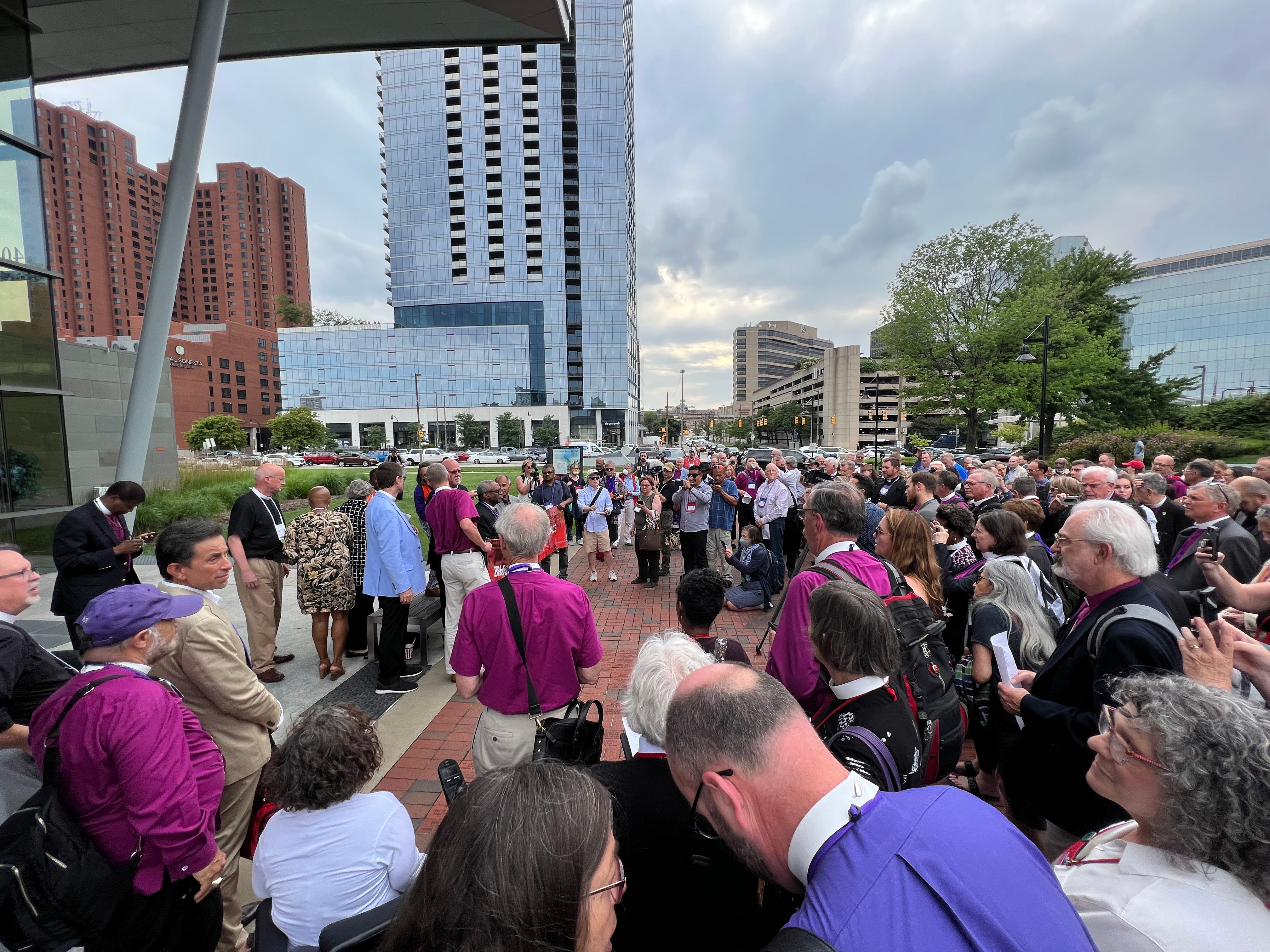
The 80th General Convention in Baltimore, having already been postponed a year due to COVID, was sharply scaled back at the eleventh hour due to a series of high-profile outbreaks in the spring of 2022. All of the committee hearings were moved online; retired bishops were asked not to attend; the exhibit hall was not opened; only one alternate deputy from each order could attend; only the most time-critical resolutions came forward for consideration, with others being tabled, dropped, consolidated, or passed as a bloc via the consent calendar. The Convention ran so efficiently that it adjourned sine die a half-day early. (Mind you, I’m not entirely sure what all we passed via the consent calendar, and I’d rather not know.)
Louisville in 2024 was slightly longer, and continued the trend of holding many of its hearings online. While a full overhaul of the rules of order failed, meaning that there will still be in-person hearings on late-submitted resolutions, this has broadened the ability of Episcopalians to testify on matters that they are passionate about. Other technological advancements in the last decade, such as the introduction of the Virtual Binder, have significantly reduced the logistical support required to host a Convention. This “slimmed-down” General Convention seems as though it will be the norm going forward - assuming, of course, that we can avoid derailing legislative sessions with prolonged spats over rules of order. Each Convention comes with tweaks. For now, however, the bicameral system and the eight-person deputation, implemented after the Diocese of Pennsylvania sent five clergy and thirteen (!) lay deputies to the very first General Convention, seems safe.
Old Faces, New Places
Of course, TREC is only one chapter of Bishop Rowe’s ministry to date, bracketed by his ministry along the Erie lakeshore and in northeastern Pennsylvania. There, as in the rest of the Episcopal Church, declining membership has been a longstanding issue- there, the cause is a bit clearer; the collapse of industry in the Appalachian and Pocono Mountains saw the death or departure of that historically-Episcopalian demographic sector;1 postwar church planting invariably failed to accurately track white flight - and so, as in many post-industrial areas, there are surviving downtown parishes (probably too many to thrive separately) and hanging-in-there rural parishes. It is a situation that Bishop Rowe knows well, having grown up in Sharon, Pennsylvania, and (much like me) accidentally stumbling upon the Episcopal Church in college.2
There have been constants in his ministry, and, as often happens, people he knew in one venue have followed him to another. Notably, he will continue to work with Canticle Communications, having hired co-owner Rebecca Wilson as contractor and adviser. Canticle’s founder, Jim Naughton, is well-known in the Church, having established the Episcopal Cafe blog in 2006. Canticle handled much of the communications work in the House of Deputies under past President Jennings, who, in partnership with the Rt. Rev Ian Douglas (former Bishop of Connecticut) is overseeing the evaluation of the Erie Lakeshore diocesan partnership. Day-to-day administration of the Erie Lakeshore will be conducted under the Very Rev. Tony Pompa, sometime dean of the Cathedral of the Diocese of Bethlehem. While a secular “culture and leadership development firm” has been retained to “facilitate engagement with churchwide staff,”3 those who have followed the Episcopal Church in the news over the past decade will recognize many familiar names.
Turning the Page
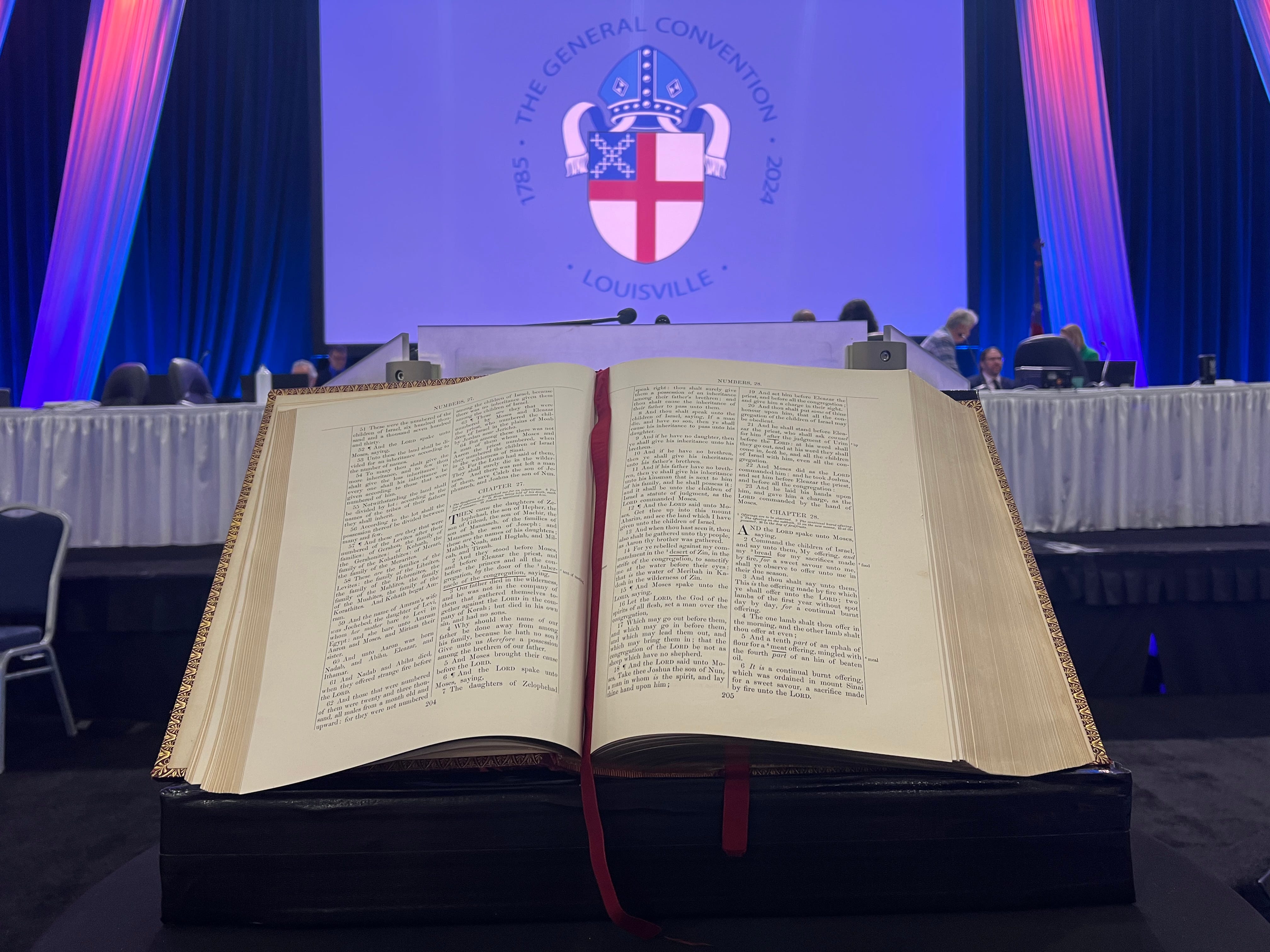
And so, the Episcopal Church enters a new era. Some familiar faces, some new ones - some traditions continue, others remain. What will this “right-sized” national church look like?
Perhaps we will see fewer staff, or a greater reliance on remote or local work. Perhaps, as here in the Diocese of Pennsylvania, there will be an explosion of “transformation committees”4 which partner with local parishes to help them optimize and redevelop surplus facilities Perhaps we will see an effort towards the reduction of the size of Executive Council, or a re-emphasis on the role of intermediate bodies - provinces, deaneries, and so forth. (Bishop Rowe rarely attended meetings of Province 3.) A far greater risk would be the haphazard dismantlement of systems which were set up to ensure that no one order - clergy, laity, or bishops - could unilaterally hijack the church, or to inadvertently further centralize authority in the hands of a few individuals. After all, for over a century, the Presiding Bishop was merely the most senior member of the House of Bishops - and, until quite recently, the President of the House of Deputies was primarily the person responsible for convening General Convention. Such a system likely worked in another era; a mere return to first principles without careful consideration would indeed be folly. Likewise, overexuberance in merging dioceses may have unforeseen consequences; many diocesan responsibilities could be shared, just as many smaller parishes should share office resources - but a bishop is also a chief pastor, and not first a corporate manager.
Regardless of how the staff makeup of 815 looks, I do not anticipate that Bishop Rowe alone will be the magic solution to the Episcopal Church’s woes anymore than telecasting, Bishop Curry, same-sex marriage, web pages, Rite Two, the ordination of women, or the Liturgical Movement were. What is needed is a culture change - and, like revivals and forest fires, such things typically begin from a spark at ground-level in some unexpected place. Bishop Curry attempted a revival, but a revival instituted from the top down always has an air of unreality to it.
Having largely come to a consensus on the issues that divided the Episcopal Church in ages past, we might begin to look once again to our strengths, to turn away from interstitial squabbling and begin once more to re-engage with the wider world. Perhaps we might empower more laypeople to go out and proclaim the Gospel - to foster local leadership - to collaborate in making a tangible improvement in the life of their communities.
If Bishop Rowe’s primacy enables that work to proceed, then he will have made all the difference in the world.
Best wishes, Bishop Rowe!
Frequently well-to-do business owners or senior executives in the local industrial concerns, primarily. There’s a reason that most Episcopal churches outside of the Colonies are to be found in larger cities, industrial hubs, or county seats!
https://episcopalnewsservice.org/2024/10/21/after-24-years-of-adaptive-ministry-presiding-bishop-elect-sean-rowe-faces-biggest-challenge-yet/
https://episcopalnewsservice.org/2024/09/25/presiding-bishop-elect-discusses-his-initial-plans-for-episcopal-church-structural-realignment/
https://www.diopa.org/news/transformative-process-saves-churches